
Microgrid Energy Solutions
Self-sufficient microgrids that keep campuses, industrial zones, and remote communities powered independently of the main grid.
Request Consultation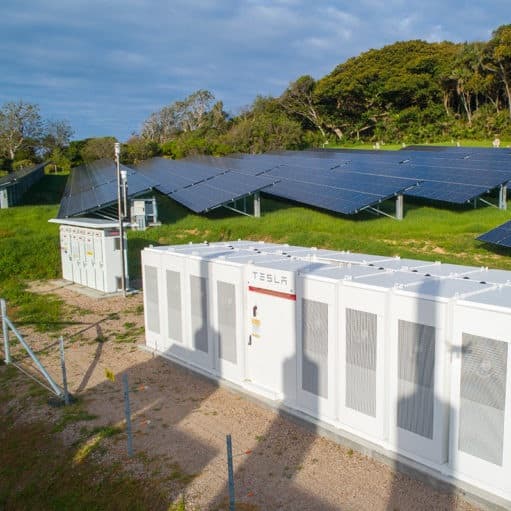
- Overview
- Campus Microgrids
- Industrial Microgrids
- Community Microgrids
- Island Microgrids
- Generation Mix Optimization
- Distributed Energy Resource Integration
- Load Segmentation
- Islanding Strategy Development
- Autonomous Microgrid Operation
- Grid-Forming Inverter Control
- Black-Start Operation
- Multi-Site Energy Coordination
- Typical Applications
- Request Consultation
Overview
Many sites need to operate independently of an unreliable or distant grid — whether to ensure continuity, reduce cost, or electrify a remote area. HelioVolt designs and deploys microgrids that combine multiple generation sources with intelligent control for autonomous, reliable operation.
Campus Microgrids
Campus microgrids provide integrated energy systems for universities, hospitals, military facilities, and corporate campuses. These solutions improve energy security while reducing operating costs and supporting sustainability objectives.
Industrial Microgrids
Industrial microgrids deliver reliable and flexible energy infrastructure for manufacturing plants, processing facilities, and industrial parks. By combining multiple generation sources with advanced controls, they enhance operational reliability and energy efficiency.
Community Microgrids
Community microgrids provide localized energy generation and distribution networks that improve resilience for residential and mixed-use developments. These systems enhance energy independence while supporting renewable energy adoption.
Island Microgrids
Island microgrids provide complete energy independence for remote islands and isolated regions. By integrating solar, battery storage, and backup generation, these systems reduce fuel consumption and improve energy security.
Generation Mix Optimization
Generation mix optimization determines the most cost-effective combination of solar, battery storage, generators, and utility power. Engineering simulations evaluate multiple scenarios to maximize performance and economic return.
Distributed Energy Resource Integration
Distributed Energy Resource (DER) integration enables multiple energy assets to operate as a coordinated system. This approach improves reliability, flexibility, and overall energy efficiency.
Load Segmentation
Load segmentation classifies facility loads according to operational importance and energy requirements. This enables optimized microgrid operation and efficient utilization of available resources.
Islanding Strategy Development
Islanding strategies allow microgrids to disconnect from the utility grid and continue operating independently during disturbances. Proper design ensures smooth transitions and uninterrupted service.
Autonomous Microgrid Operation
Autonomous microgrids utilize intelligent controls to continuously optimize generation, storage, and consumption without operator intervention. These systems enhance reliability and operational efficiency.
Grid-Forming Inverter Control
Grid-forming inverters establish stable voltage and frequency references, enabling microgrids to operate independently of utility infrastructure. This technology is becoming a cornerstone of next-generation resilient power systems.
Black-Start Operation
Black-start operation allows a microgrid to energize itself from a fully de-energized state without relying on the main utility grid, restoring power to critical loads first and rebuilding the network in a controlled sequence.
Multi-Site Energy Coordination
Multi-site coordination platforms manage multiple facilities and distributed energy resources from a centralized control system. This improves overall system efficiency and operational visibility.
Typical Applications
Industrial & Commercial Hybrid Energy
NextUnstable Grid Solutions